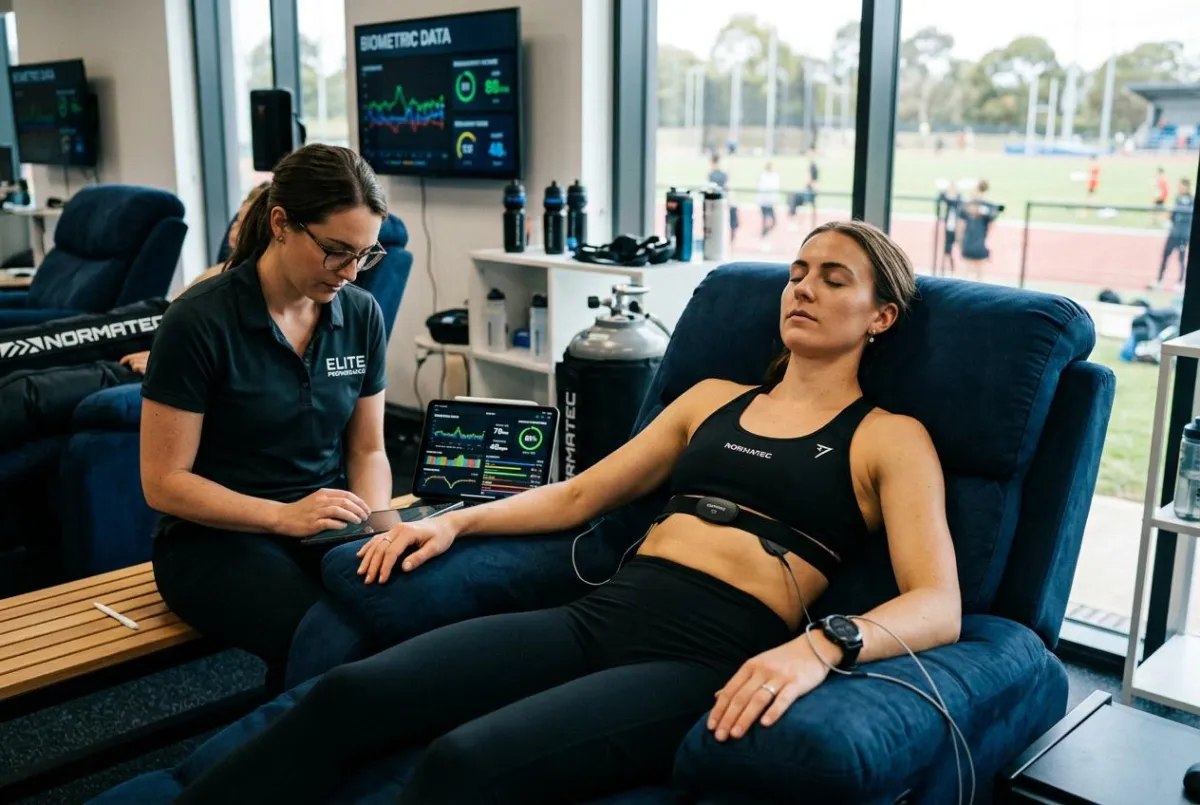
Recovery and Inflammation Research: What the Science Actually Says
As interest in recovery science continues to accelerate this June 2026, one topic keeps generating confusion among athletes, coaches, and everyday gym-goers alike: inflammation. You've probably heard that inflammation is the enemy of recovery, that you should suppress it as aggressively as possible after every hard workout, and that anything anti-inflammatory is automatically good for your body. These ideas are widespread — and they're not entirely accurate. Let's look at what the research actually says and why getting this wrong could be quietly undermining your progress.
MISCONCEPTION 1: ALL POST-EXERCISE INFLAMMATION IS BAD AND SHOULD BE SUPPRESSED
This is perhaps the most deeply rooted myth in the recovery space. The idea that inflammation is universally harmful sounds intuitive — inflammation causes soreness, soreness means damage, so reduce inflammation and recover faster. But exercise-induced inflammation is not the same as the chronic, systemic inflammation associated with disease. It is a tightly regulated biological process that is, in many cases, essential for the adaptations you're training for in the first place.
When you perform resistance training or high-intensity exercise, you create microscopic damage to muscle fibers. In response, your immune system dispatches inflammatory mediators — including cytokines, neutrophils, and macrophages — to the site of damage. This is not a malfunction. It is a coordinated repair and remodeling process. The inflammatory cascade removes damaged cellular debris, activates satellite cells (the muscle stem cells responsible for repair), and ultimately drives hypertrophy and strength adaptation. Blocking this process indiscriminately, particularly through non-steroidal anti-inflammatory drugs (NSAIDs) taken habitually around training, may actually blunt long-term muscle development.
Research into multiple cold-water immersion protocols and their effects on muscle damage and inflammation found that while acute inflammatory markers were reduced in the short term, the downstream effects on muscle function recovery were complex — highlighting that suppressing inflammation too aggressively does not always translate to better outcomes. The biological timeline matters enormously here.
MISCONCEPTION 2: ANTI-INFLAMMATORY RECOVERY TOOLS ARE ALWAYS PERFORMANCE-ENHANCING
Cold water immersion, cryotherapy, and heavy NSAID use are often marketed as performance-enhancing recovery tools largely because they reduce inflammatory markers. But reducing inflammatory markers and improving actual performance are not the same thing. In fact, studies are increasingly pointing out that for certain adaptations — particularly strength and hypertrophy — aggressively dampening the acute inflammatory response may be counterproductive when used chronically.
The distinction researchers now commonly make is between acute training adaptations and competition recovery. If you have a tournament or back-to-back performance events, short-term inflammation suppression can help you perform again sooner. But if you are in a training block focused on building capacity, repeatedly blocking the inflammatory signal may reduce the training stimulus your body needs to adapt. This nuance is explored across recovery modality research catalogued here, where context — not just the intervention itself — determines the outcome.
A useful parallel is the emerging research on delayed onset muscle soreness. A systematic review with meta-meta-analysis on physical therapies for delayed-onset muscle soreness found that while various interventions can reduce perceived soreness, the relationship between soreness reduction, inflammation modulation, and actual functional recovery is not linear. Soreness going away does not necessarily mean your muscles have fully recovered or adapted.
MISCONCEPTION 3: CHRONIC INFLAMMATION AND EXERCISE INFLAMMATION ARE THE SAME PROBLEM
Conflating acute exercise-induced inflammation with chronic low-grade systemic inflammation is a significant conceptual error that shapes how many people approach their recovery strategies. Chronic inflammation — the kind associated with poor sleep, processed food diets, psychological stress, sedentary behavior, and metabolic dysfunction — is a well-established contributor to disease risk and impaired recovery capacity. This type of inflammation does not resolve on its own in 24 to 72 hours the way exercise-induced inflammation typically does.
Here is where lifestyle factors genuinely matter for recovery. If your baseline inflammatory load is high due to poor sleep or chronic stress, your body enters each training session already compromised. The acute inflammatory response from exercise then piles onto a system that lacks the regulatory capacity to resolve it efficiently. This is not a training problem — it is a systemic health problem. Recovery science as a whole increasingly recognizes that pre-recovery — the lifestyle habits that determine your inflammatory baseline — may matter as much as any post-workout tool you use.
Nutrition also plays a direct role. Dietary patterns high in antioxidants and polyphenols appear to support the resolution phase of inflammation rather than simply blocking it. Tart cherry, omega-3 fatty acids, and curcumin have all been studied in this context. Interestingly, the goal is not to eliminate inflammation but to support its resolution — a distinction with significant practical implications for gut health, systemic inflammation, and nutritional recovery.
WHAT DOES THIS MEAN FOR YOUR RECOVERY APPROACH
The research points toward a context-sensitive model. During heavy training blocks, allow the natural inflammatory process to do its work — especially in the 24 to 48 hours immediately following a session. Reserve aggressive anti-inflammatory interventions for periods when performance turnaround speed matters more than long-term adaptation. Prioritize chronic inflammation management through sleep quality, stress reduction, and a nutrient-dense diet. And recognize that research comparing recovery modalities after exhausting eccentric exercise consistently shows that no single intervention outperforms the fundamentals when applied intelligently over time.
Understanding inflammation as a signal rather than a problem changes the entire framework. Your body is not working against you — it is working through a process. The science supports guiding that process, not simply suppressing it.
KEY TAKEAWAY: Exercise-induced inflammation is a necessary part of muscle repair and adaptation, not an obstacle to it — and indiscriminately suppressing it, especially during training blocks, may undermine the very gains you are working toward.
If this post shifted how you think about inflammation and recovery, there is much more where that came from. Visit RecoveryScienceDaily.com for more research-backed guides that cut through the noise and give you the science you can actually use.
FAQ
Q: Should I avoid all anti-inflammatory strategies after a workout?
A: Not necessarily. The key is context. During dedicated training blocks focused on building strength or muscle, allowing the natural inflammatory process to occur is generally beneficial. Anti-inflammatory tools like cold water immersion are better suited for competition recovery or periods when you need to perform again quickly rather than maximize long-term adaptation.
Q: How do I know if my inflammation is exercise-related or chronic?
A: Exercise-induced inflammation typically resolves within 24 to 72 hours and is localized to the trained muscles. Chronic systemic inflammation is persistent, not tied to specific exercise sessions, and is often reflected in elevated resting heart rate, poor sleep quality, persistent fatigue, and impaired recovery between sessions. A healthcare provider can also assess inflammatory markers through blood work if you have ongoing concerns.
Q: Do anti-inflammatory foods interfere with muscle adaptation the same way NSAIDs do?
A: The evidence here is more nuanced. Whole food sources of anti-inflammatory compounds — such as omega-3 fatty acids, tart cherry, and polyphenol-rich foods — appear to support the resolution of inflammation rather than blocking it entirely, which is a meaningfully different mechanism than pharmaceutical NSAIDs. Research suggests these nutritional approaches may actually enhance recovery without significantly impairing training adaptations, though timing and dosage still matter.
Back to BlogMISCONCEPTION 1: ALL POST-EXERCISE INFLAMMATION IS BAD AND SHOULD BE SUPPRESSED
This is perhaps the most deeply rooted myth in the recovery space. The idea that inflammation is universally harmful sounds intuitive — inflammation causes soreness, soreness means damage, so reduce inflammation and recover faster. But exercise-induced inflammation is not the same as the chronic, systemic inflammation associated with disease. It is a tightly regulated biological process that is, in many cases, essential for the adaptations you're training for in the first place.
When you perform resistance training or high-intensity exercise, you create microscopic damage to muscle fibers. In response, your immune system dispatches inflammatory mediators — including cytokines, neutrophils, and macrophages — to the site of damage. This is not a malfunction. It is a coordinated repair and remodeling process. The inflammatory cascade removes damaged cellular debris, activates satellite cells (the muscle stem cells responsible for repair), and ultimately drives hypertrophy and strength adaptation. Blocking this process indiscriminately, particularly through non-steroidal anti-inflammatory drugs (NSAIDs) taken habitually around training, may actually blunt long-term muscle development.
Research into multiple cold-water immersion protocols and their effects on muscle damage and inflammation found that while acute inflammatory markers were reduced in the short term, the downstream effects on muscle function recovery were complex — highlighting that suppressing inflammation too aggressively does not always translate to better outcomes. The biological timeline matters enormously here.
MISCONCEPTION 2: ANTI-INFLAMMATORY RECOVERY TOOLS ARE ALWAYS PERFORMANCE-ENHANCING
Cold water immersion, cryotherapy, and heavy NSAID use are often marketed as performance-enhancing recovery tools largely because they reduce inflammatory markers. But reducing inflammatory markers and improving actual performance are not the same thing. In fact, studies are increasingly pointing out that for certain adaptations — particularly strength and hypertrophy — aggressively dampening the acute inflammatory response may be counterproductive when used chronically.
The distinction researchers now commonly make is between acute training adaptations and competition recovery. If you have a tournament or back-to-back performance events, short-term inflammation suppression can help you perform again sooner. But if you are in a training block focused on building capacity, repeatedly blocking the inflammatory signal may reduce the training stimulus your body needs to adapt. This nuance is explored across recovery modality research catalogued here, where context — not just the intervention itself — determines the outcome.
A useful parallel is the emerging research on delayed onset muscle soreness. A systematic review with meta-meta-analysis on physical therapies for delayed-onset muscle soreness found that while various interventions can reduce perceived soreness, the relationship between soreness reduction, inflammation modulation, and actual functional recovery is not linear. Soreness going away does not necessarily mean your muscles have fully recovered or adapted.
MISCONCEPTION 3: CHRONIC INFLAMMATION AND EXERCISE INFLAMMATION ARE THE SAME PROBLEM
Conflating acute exercise-induced inflammation with chronic low-grade systemic inflammation is a significant conceptual error that shapes how many people approach their recovery strategies. Chronic inflammation — the kind associated with poor sleep, processed food diets, psychological stress, sedentary behavior, and metabolic dysfunction — is a well-established contributor to disease risk and impaired recovery capacity. This type of inflammation does not resolve on its own in 24 to 72 hours the way exercise-induced inflammation typically does.
Here is where lifestyle factors genuinely matter for recovery. If your baseline inflammatory load is high due to poor sleep or chronic stress, your body enters each training session already compromised. The acute inflammatory response from exercise then piles onto a system that lacks the regulatory capacity to resolve it efficiently. This is not a training problem — it is a systemic health problem. Recovery science as a whole increasingly recognizes that pre-recovery — the lifestyle habits that determine your inflammatory baseline — may matter as much as any post-workout tool you use.
Nutrition also plays a direct role. Dietary patterns high in antioxidants and polyphenols appear to support the resolution phase of inflammation rather than simply blocking it. Tart cherry, omega-3 fatty acids, and curcumin have all been studied in this context. Interestingly, the goal is not to eliminate inflammation but to support its resolution — a distinction with significant practical implications for gut health, systemic inflammation, and nutritional recovery.
WHAT DOES THIS MEAN FOR YOUR RECOVERY APPROACH
The research points toward a context-sensitive model. During heavy training blocks, allow the natural inflammatory process to do its work — especially in the 24 to 48 hours immediately following a session. Reserve aggressive anti-inflammatory interventions for periods when performance turnaround speed matters more than long-term adaptation. Prioritize chronic inflammation management through sleep quality, stress reduction, and a nutrient-dense diet. And recognize that research comparing recovery modalities after exhausting eccentric exercise consistently shows that no single intervention outperforms the fundamentals when applied intelligently over time.
Understanding inflammation as a signal rather than a problem changes the entire framework. Your body is not working against you — it is working through a process. The science supports guiding that process, not simply suppressing it.
KEY TAKEAWAY: Exercise-induced inflammation is a necessary part of muscle repair and adaptation, not an obstacle to it — and indiscriminately suppressing it, especially during training blocks, may undermine the very gains you are working toward.
If this post shifted how you think about inflammation and recovery, there is much more where that came from. Visit RecoveryScienceDaily.com for more research-backed guides that cut through the noise and give you the science you can actually use.
FAQ
Q: Should I avoid all anti-inflammatory strategies after a workout?
A: Not necessarily. The key is context. During dedicated training blocks focused on building strength or muscle, allowing the natural inflammatory process to occur is generally beneficial. Anti-inflammatory tools like cold water immersion are better suited for competition recovery or periods when you need to perform again quickly rather than maximize long-term adaptation.
Q: How do I know if my inflammation is exercise-related or chronic?
A: Exercise-induced inflammation typically resolves within 24 to 72 hours and is localized to the trained muscles. Chronic systemic inflammation is persistent, not tied to specific exercise sessions, and is often reflected in elevated resting heart rate, poor sleep quality, persistent fatigue, and impaired recovery between sessions. A healthcare provider can also assess inflammatory markers through blood work if you have ongoing concerns.
Q: Do anti-inflammatory foods interfere with muscle adaptation the same way NSAIDs do?
A: The evidence here is more nuanced. Whole food sources of anti-inflammatory compounds — such as omega-3 fatty acids, tart cherry, and polyphenol-rich foods — appear to support the resolution of inflammation rather than blocking it entirely, which is a meaningfully different mechanism than pharmaceutical NSAIDs. Research suggests these nutritional approaches may actually enhance recovery without significantly impairing training adaptations, though timing and dosage still matter.