Muscle Recovery Research Overview: What the Science Actually Says
As interest in recovery science continues to grow this July 2026, one thing is becoming increasingly clear: most people are still recovering by instinct rather than by evidence. Whether you train five days a week or just hit the gym on weekends, understanding the biological mechanisms behind muscle recovery — and how to support them systematically — can make a meaningful difference in your results, your resilience, and your long-term health. This guide walks you through the current state of muscle recovery research, step by step, so you can move from guesswork to a genuinely informed approach.
STEP 1: UNDERSTAND WHAT MUSCLE RECOVERY ACTUALLY IS
Muscle recovery is not simply the absence of soreness. At the cellular level, intense exercise creates microscopic damage to muscle fibers, triggers an acute inflammatory response, and depletes energy stores including glycogen and phosphocreatine. Recovery is the coordinated biological process by which your body repairs that damage, reduces inflammation, restores energy, and adapts the tissue to be stronger and more resilient than before. This process involves immune cells, satellite cells, hormonal signaling, and the nervous system working together. Skipping or shortchanging recovery does not just leave you feeling tired — it disrupts this entire cascade, potentially leading to reduced performance and increased injury risk over time. Understanding this foundation is the first step to making smarter decisions about everything that follows.
STEP 2: RECOGNIZE THE PHASES OF RECOVERY
Researchers generally divide muscle recovery into distinct phases. The immediate phase occurs in the first few hours post-exercise and involves inflammation, immune cell recruitment, and the beginning of tissue repair. The short-term phase unfolds over the next one to three days, during which muscle protein synthesis peaks and glycogen is replenished — provided adequate nutrition is in place. The long-term adaptation phase, which can extend over days to weeks, is where structural changes in muscle architecture are consolidated. Each phase has its own nutritional, sleep, and behavioral requirements. Trying to rush any one phase without respecting the others is a common reason athletes plateau or get injured despite putting in consistent work. You can explore more about how these mechanisms are categorized at Recovery Science Daily's recovery research hub, where these topics are covered in depth.
STEP 3: APPLY THE RESEARCH ON ACTIVE VERSUS PASSIVE RECOVERY
One of the most practically useful areas of recovery science involves what you do between hard sessions. A substantial body of research has explored whether light movement — often called active recovery — is superior to complete rest. A study examining active versus passive recovery on metabolism and subsequent performance found that low-intensity activity between bouts helped maintain performance output more effectively than full rest. The likely mechanism involves enhanced blood lactate clearance and improved circulation to recovering tissues. That said, active recovery is not universally superior — its benefits depend on exercise intensity, training volume, and individual recovery capacity. The takeaway from the research is nuanced: gentle movement such as walking, light cycling, or easy swimming on rest days can support recovery, but this should not replace full rest when the body is genuinely depleted.
STEP 4: BUILD YOUR RECOVERY TOOLKIT FROM THE EVIDENCE
Beyond rest and movement, a growing number of recovery modalities have been studied with varying degrees of rigor. Cold water immersion, compression garments, foam rolling, massage, and sleep optimization all have bodies of research behind them. Not all are created equal. For example, a randomized controlled trial assessing various post-exercise interventions for delayed-onset muscle soreness found meaningful differences in effectiveness across modalities depending on the type of exercise and individual response. The research also highlights that combining interventions — such as cold exposure paired with adequate protein intake — may produce additive benefits. Rather than chasing the newest trend, the evidence supports building a consistent toolkit of two to three well-studied methods that fit your schedule, budget, and physiology. If you are also managing oxidative stress and inflammation, research on antioxidant and hydration-based recovery approaches may offer additional context worth exploring.
STEP 5: PRIORITIZE SLEEP AS A NON-NEGOTIABLE RECOVERY INPUT
No recovery protocol is complete without adequate sleep. During deep sleep stages, growth hormone secretion peaks, muscle protein synthesis accelerates, and the glymphatic system clears metabolic waste from the brain. Research consistently identifies sleep deprivation as one of the most potent suppressors of recovery quality — reducing strength, coordination, immune function, and emotional regulation simultaneously. While sleep science deserves its own deep dive, the foundational recommendation from the literature is seven to nine hours of quality sleep per night for most adults engaged in regular training. Even one night of poor sleep has measurable effects on performance the following day. Sleep is not a passive state — it is arguably the most productive part of your entire recovery cycle.
STEP 6: TRACK, ADJUST, AND INDIVIDUALIZE
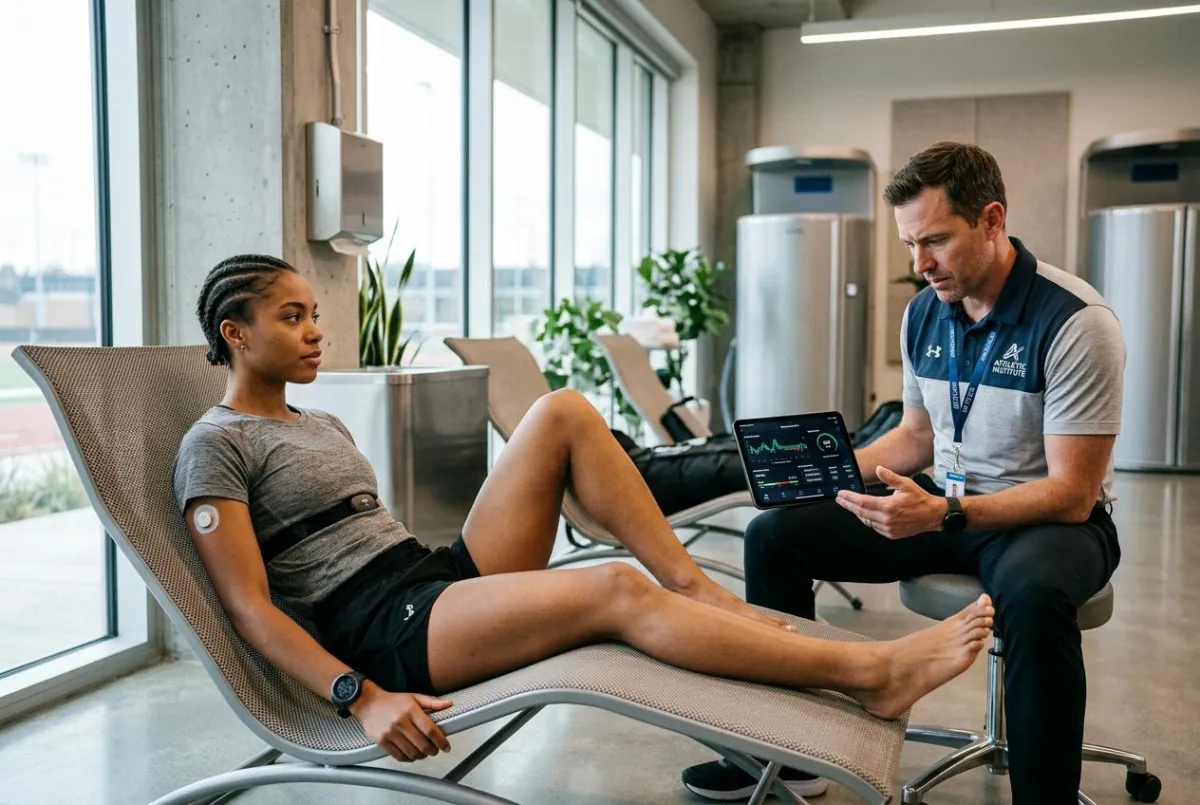
One of the most important insights from recent recovery research is that individual variability is enormous. What works optimally for one athlete may be suboptimal for another due to genetics, training history, stress load, nutrition status, and sleep quality. Research on active versus passive recovery during high-intensity interval exercise noted significant individual differences in response, reinforcing that population-level averages do not always translate cleanly to individual practice. This is where tracking becomes valuable — not to obsess over data, but to identify patterns. Monitoring subjective recovery scores, resting heart rate, sleep duration, and performance metrics over time gives you feedback that no single study can provide. Treat your recovery practice as an ongoing experiment with a sample size of one. For a broader look at the science underpinning these approaches, Recovery Science Daily covers the full landscape of recovery research in an accessible, evidence-first format.
KEY TAKEAWAY: Muscle recovery is a multi-phase biological process, and the research consistently shows that combining adequate sleep, strategic movement, targeted modalities, and individualized tracking produces better outcomes than any single intervention alone.
Recovery science is evolving rapidly, and staying informed is one of the most powerful things you can do for your training. Explore Recovery Science Daily for more research-backed guides designed to help you recover smarter and perform better at every level.
FAQ
Q: How long does muscle recovery actually take after a hard workout?
A: Recovery timelines vary depending on exercise intensity, training status, and individual biology, but most research points to 48 to 72 hours for full recovery after high-intensity or eccentric-heavy sessions. Factors like sleep quality, nutrition, and stress levels can significantly shorten or extend this window.
Q: Is soreness a reliable indicator of whether muscles have recovered?
A: Not entirely. Delayed onset muscle soreness (DOMS) typically peaks 24 to 72 hours after exercise, but its absence does not confirm full recovery — especially for the nervous system and energy systems. Performance metrics and subjective readiness scores tend to be more reliable recovery indicators than soreness alone.
Q: Do I need expensive recovery tools to recover effectively?
A: No. The research consistently shows that the highest-impact recovery inputs — sleep, nutrition timing, hydration, and appropriate rest — cost little to nothing. Modalities like cold water immersion and compression garments can offer additional benefits, but they are complementary to, not replacements for, these foundational habits.
Back to BlogSTEP 1: UNDERSTAND WHAT MUSCLE RECOVERY ACTUALLY IS
Muscle recovery is not simply the absence of soreness. At the cellular level, intense exercise creates microscopic damage to muscle fibers, triggers an acute inflammatory response, and depletes energy stores including glycogen and phosphocreatine. Recovery is the coordinated biological process by which your body repairs that damage, reduces inflammation, restores energy, and adapts the tissue to be stronger and more resilient than before. This process involves immune cells, satellite cells, hormonal signaling, and the nervous system working together. Skipping or shortchanging recovery does not just leave you feeling tired — it disrupts this entire cascade, potentially leading to reduced performance and increased injury risk over time. Understanding this foundation is the first step to making smarter decisions about everything that follows.
STEP 2: RECOGNIZE THE PHASES OF RECOVERY
Researchers generally divide muscle recovery into distinct phases. The immediate phase occurs in the first few hours post-exercise and involves inflammation, immune cell recruitment, and the beginning of tissue repair. The short-term phase unfolds over the next one to three days, during which muscle protein synthesis peaks and glycogen is replenished — provided adequate nutrition is in place. The long-term adaptation phase, which can extend over days to weeks, is where structural changes in muscle architecture are consolidated. Each phase has its own nutritional, sleep, and behavioral requirements. Trying to rush any one phase without respecting the others is a common reason athletes plateau or get injured despite putting in consistent work. You can explore more about how these mechanisms are categorized at Recovery Science Daily's recovery research hub, where these topics are covered in depth.
STEP 3: APPLY THE RESEARCH ON ACTIVE VERSUS PASSIVE RECOVERY
One of the most practically useful areas of recovery science involves what you do between hard sessions. A substantial body of research has explored whether light movement — often called active recovery — is superior to complete rest. A study examining active versus passive recovery on metabolism and subsequent performance found that low-intensity activity between bouts helped maintain performance output more effectively than full rest. The likely mechanism involves enhanced blood lactate clearance and improved circulation to recovering tissues. That said, active recovery is not universally superior — its benefits depend on exercise intensity, training volume, and individual recovery capacity. The takeaway from the research is nuanced: gentle movement such as walking, light cycling, or easy swimming on rest days can support recovery, but this should not replace full rest when the body is genuinely depleted.
STEP 4: BUILD YOUR RECOVERY TOOLKIT FROM THE EVIDENCE
Beyond rest and movement, a growing number of recovery modalities have been studied with varying degrees of rigor. Cold water immersion, compression garments, foam rolling, massage, and sleep optimization all have bodies of research behind them. Not all are created equal. For example, a randomized controlled trial assessing various post-exercise interventions for delayed-onset muscle soreness found meaningful differences in effectiveness across modalities depending on the type of exercise and individual response. The research also highlights that combining interventions — such as cold exposure paired with adequate protein intake — may produce additive benefits. Rather than chasing the newest trend, the evidence supports building a consistent toolkit of two to three well-studied methods that fit your schedule, budget, and physiology. If you are also managing oxidative stress and inflammation, research on antioxidant and hydration-based recovery approaches may offer additional context worth exploring.
STEP 5: PRIORITIZE SLEEP AS A NON-NEGOTIABLE RECOVERY INPUT
No recovery protocol is complete without adequate sleep. During deep sleep stages, growth hormone secretion peaks, muscle protein synthesis accelerates, and the glymphatic system clears metabolic waste from the brain. Research consistently identifies sleep deprivation as one of the most potent suppressors of recovery quality — reducing strength, coordination, immune function, and emotional regulation simultaneously. While sleep science deserves its own deep dive, the foundational recommendation from the literature is seven to nine hours of quality sleep per night for most adults engaged in regular training. Even one night of poor sleep has measurable effects on performance the following day. Sleep is not a passive state — it is arguably the most productive part of your entire recovery cycle.
STEP 6: TRACK, ADJUST, AND INDIVIDUALIZE
One of the most important insights from recent recovery research is that individual variability is enormous. What works optimally for one athlete may be suboptimal for another due to genetics, training history, stress load, nutrition status, and sleep quality. Research on active versus passive recovery during high-intensity interval exercise noted significant individual differences in response, reinforcing that population-level averages do not always translate cleanly to individual practice. This is where tracking becomes valuable — not to obsess over data, but to identify patterns. Monitoring subjective recovery scores, resting heart rate, sleep duration, and performance metrics over time gives you feedback that no single study can provide. Treat your recovery practice as an ongoing experiment with a sample size of one. For a broader look at the science underpinning these approaches, Recovery Science Daily covers the full landscape of recovery research in an accessible, evidence-first format.
KEY TAKEAWAY: Muscle recovery is a multi-phase biological process, and the research consistently shows that combining adequate sleep, strategic movement, targeted modalities, and individualized tracking produces better outcomes than any single intervention alone.
Recovery science is evolving rapidly, and staying informed is one of the most powerful things you can do for your training. Explore Recovery Science Daily for more research-backed guides designed to help you recover smarter and perform better at every level.
FAQ
Q: How long does muscle recovery actually take after a hard workout?
A: Recovery timelines vary depending on exercise intensity, training status, and individual biology, but most research points to 48 to 72 hours for full recovery after high-intensity or eccentric-heavy sessions. Factors like sleep quality, nutrition, and stress levels can significantly shorten or extend this window.
Q: Is soreness a reliable indicator of whether muscles have recovered?
A: Not entirely. Delayed onset muscle soreness (DOMS) typically peaks 24 to 72 hours after exercise, but its absence does not confirm full recovery — especially for the nervous system and energy systems. Performance metrics and subjective readiness scores tend to be more reliable recovery indicators than soreness alone.
Q: Do I need expensive recovery tools to recover effectively?
A: No. The research consistently shows that the highest-impact recovery inputs — sleep, nutrition timing, hydration, and appropriate rest — cost little to nothing. Modalities like cold water immersion and compression garments can offer additional benefits, but they are complementary to, not replacements for, these foundational habits.