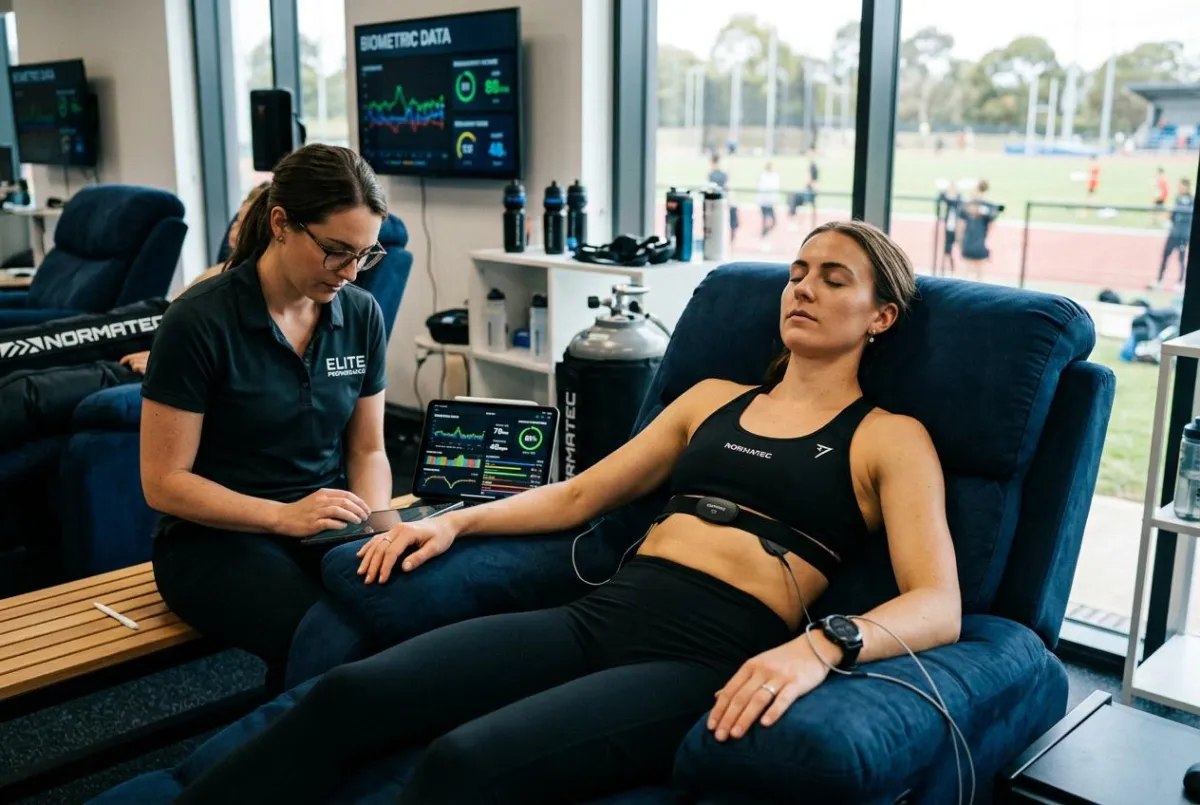
Heart Rate Variability and Recovery Research: What the Science Actually Shows
As interest in recovery science continues to grow this June 2026, heart rate variability — commonly known as HRV — has become one of the most discussed metrics among athletes, coaches, and health-conscious individuals alike. Wearables track it, apps interpret it, and fitness influencers swear by it. But beneath the buzz, a few persistent misconceptions have taken hold that deserve a closer look. Before you restructure your entire training week around a single morning HRV reading, it's worth understanding what the research actually supports — and where the science is still catching up.
MISCONCEPTION 1: A LOW HRV ALWAYS MEANS YOU SHOULD REST
One of the most common assumptions is that a low HRV score is a hard signal to skip training. The logic sounds reasonable on the surface: low HRV suggests your autonomic nervous system is under stress, therefore your body needs rest. But the science is considerably more nuanced than that.
HRV reflects the variation in time between consecutive heartbeats and is regulated by the balance between your sympathetic and parasympathetic nervous systems. A suppressed HRV can indicate fatigue, psychological stress, illness, poor sleep, or even dehydration — none of which tell you the same thing about your readiness to train. A single low reading on its own carries limited actionable meaning. What matters far more is your HRV trend over time relative to your personal baseline. Research consistently shows that individual variability in HRV is substantial, meaning population-level norms are largely unhelpful for day-to-day training decisions. Comparing your HRV number to a friend's or to a published average misses the point entirely. Tracking your own rolling average over several weeks is where the signal becomes genuinely useful.
MISCONCEPTION 2: HRV IS ONLY RELEVANT FOR ELITE ATHLETES
Another widespread belief is that HRV monitoring only matters for competitive athletes managing intense training loads. In reality, HRV as a recovery and health indicator has meaningful relevance across a broad population — including desk workers, recreational exercisers, and people managing chronic stress.
The autonomic nervous system doesn't distinguish between athletic training stress and psychological or occupational stress. Both forms of load suppress parasympathetic activity and can reduce HRV. research on training recovery methods increasingly supports HRV monitoring as a practical tool for anyone trying to balance physical exertion with life stressors — not just those logging triple-digit weekly mileage. For recreational athletes, consistent HRV tracking can help identify when accumulated life stress is compounding physical fatigue, even when training loads appear manageable on paper.
MISCONCEPTION 3: HRV APPS AND WEARABLES ARE ALL MEASURING THE SAME THING
This is perhaps the most practically damaging misconception. With dozens of consumer HRV tools on the market — each using different sensors, algorithms, measurement windows, and reporting metrics — assuming your Garmin HRV score is directly comparable to a Whoop recovery score or an Oura ring readiness number is a significant error.
Different devices capture HRV using optical sensors or chest straps, measure during different times of day or sleep stages, and report values using different statistical methods. Some report RMSSD (root mean square of successive differences), others use SDNN or proprietary composite scores. The metric being calculated matters enormously for interpretation. This is not a trivial distinction — studies examining HRV measurement methodology have found meaningful differences between devices even when worn simultaneously by the same individual. If you switch devices, your baseline effectively resets, and historical comparisons become unreliable. The practical takeaway: pick one tool, use it consistently, at the same time each day, and focus on your personal trends rather than absolute values.
WHAT THE RESEARCH ACTUALLY SUPPORTS
When you strip away the misconceptions, what does peer-reviewed research tell us HRV is genuinely good for in a recovery context? Quite a bit — when used correctly. HRV-guided training, where athletes adjust session intensity based on morning HRV readings relative to their rolling baseline, has shown promise in optimizing training load management. The autonomic nervous system data captured through HRV provides a real-time window into how the body is responding to cumulative stress — physical, mental, and environmental combined.
HRV also has established connections to sleep quality. Poor sleep is one of the most consistent suppressors of next-morning HRV, which is why sleep quality and recovery research frequently references HRV as a useful objective marker. Athletes who report feeling well-rested after high-quality sleep typically show corresponding HRV elevation, reinforcing that HRV is capturing something biologically real rather than just noise.
Inflammation also plays a role. Systemic inflammation — whether from hard training, illness, or metabolic stress — predictably reduces HRV by shifting autonomic balance toward sympathetic dominance. Research at the intersection of gut health, inflammation, and recovery suggests that factors like diet quality, hydration status, and microbiome health can influence HRV through their effects on inflammatory markers. This bidirectional relationship makes HRV a surprisingly sensitive indicator of overall physiological load — not just training load in isolation.
HOW TO USE HRV INTELLIGENTLY
Using HRV data well comes down to a few straightforward principles. First, establish a baseline by measuring consistently for at least two to four weeks before drawing any conclusions. Second, always measure at the same time — ideally immediately upon waking, before checking your phone or getting out of bed. Third, use a rolling average rather than reacting to single-day readings. Fourth, treat HRV as one input among many rather than the sole arbiter of your training day. How you slept, how you feel subjectively, your training history for the week, and your stress load all deserve equal consideration alongside your HRV number.
The broader evidence base is encouraging but also appropriately cautious. Recovery science as a field continues to refine best practices around HRV interpretation, and ongoing research is helping clarify which populations benefit most from which measurement protocols.
KEY TAKEAWAY: HRV is a genuinely useful recovery tool when tracked consistently against your personal baseline — but single readings, cross-device comparisons, and population norms are poor guides for training decisions. Context, trends, and consistency are everything.
If you found this breakdown useful, explore RecoveryScienceDaily.com for more research-backed guides on recovery science, training load management, and the metrics that actually matter. Our mission is to make the science accessible, honest, and actionable for every type of reader.
FAQ
Q: What is a good HRV number for recovery?
A: There is no universal good HRV number because individual baselines vary enormously based on age, fitness level, and genetics. What matters is your own personal baseline trend — consistently tracking your HRV over weeks allows you to identify meaningful deviations that signal elevated stress or fatigue.
Q: How often should I measure my HRV?
A: Daily morning measurements, taken immediately upon waking before getting out of bed, provide the most consistent and useful data. Measuring at the same time each day in the same position minimizes variability caused by posture, movement, and circadian factors.
Q: Can stress from work or life affect my HRV the same way training does?
A: Yes — psychological and occupational stress activates the sympathetic nervous system in ways that measurably suppress HRV, sometimes as significantly as hard physical training. This is one reason why HRV can feel low even during light training weeks when life stress is high.
Back to BlogMISCONCEPTION 1: A LOW HRV ALWAYS MEANS YOU SHOULD REST
One of the most common assumptions is that a low HRV score is a hard signal to skip training. The logic sounds reasonable on the surface: low HRV suggests your autonomic nervous system is under stress, therefore your body needs rest. But the science is considerably more nuanced than that.
HRV reflects the variation in time between consecutive heartbeats and is regulated by the balance between your sympathetic and parasympathetic nervous systems. A suppressed HRV can indicate fatigue, psychological stress, illness, poor sleep, or even dehydration — none of which tell you the same thing about your readiness to train. A single low reading on its own carries limited actionable meaning. What matters far more is your HRV trend over time relative to your personal baseline. Research consistently shows that individual variability in HRV is substantial, meaning population-level norms are largely unhelpful for day-to-day training decisions. Comparing your HRV number to a friend's or to a published average misses the point entirely. Tracking your own rolling average over several weeks is where the signal becomes genuinely useful.
MISCONCEPTION 2: HRV IS ONLY RELEVANT FOR ELITE ATHLETES
Another widespread belief is that HRV monitoring only matters for competitive athletes managing intense training loads. In reality, HRV as a recovery and health indicator has meaningful relevance across a broad population — including desk workers, recreational exercisers, and people managing chronic stress.
The autonomic nervous system doesn't distinguish between athletic training stress and psychological or occupational stress. Both forms of load suppress parasympathetic activity and can reduce HRV. research on training recovery methods increasingly supports HRV monitoring as a practical tool for anyone trying to balance physical exertion with life stressors — not just those logging triple-digit weekly mileage. For recreational athletes, consistent HRV tracking can help identify when accumulated life stress is compounding physical fatigue, even when training loads appear manageable on paper.
MISCONCEPTION 3: HRV APPS AND WEARABLES ARE ALL MEASURING THE SAME THING
This is perhaps the most practically damaging misconception. With dozens of consumer HRV tools on the market — each using different sensors, algorithms, measurement windows, and reporting metrics — assuming your Garmin HRV score is directly comparable to a Whoop recovery score or an Oura ring readiness number is a significant error.
Different devices capture HRV using optical sensors or chest straps, measure during different times of day or sleep stages, and report values using different statistical methods. Some report RMSSD (root mean square of successive differences), others use SDNN or proprietary composite scores. The metric being calculated matters enormously for interpretation. This is not a trivial distinction — studies examining HRV measurement methodology have found meaningful differences between devices even when worn simultaneously by the same individual. If you switch devices, your baseline effectively resets, and historical comparisons become unreliable. The practical takeaway: pick one tool, use it consistently, at the same time each day, and focus on your personal trends rather than absolute values.
WHAT THE RESEARCH ACTUALLY SUPPORTS
When you strip away the misconceptions, what does peer-reviewed research tell us HRV is genuinely good for in a recovery context? Quite a bit — when used correctly. HRV-guided training, where athletes adjust session intensity based on morning HRV readings relative to their rolling baseline, has shown promise in optimizing training load management. The autonomic nervous system data captured through HRV provides a real-time window into how the body is responding to cumulative stress — physical, mental, and environmental combined.
HRV also has established connections to sleep quality. Poor sleep is one of the most consistent suppressors of next-morning HRV, which is why sleep quality and recovery research frequently references HRV as a useful objective marker. Athletes who report feeling well-rested after high-quality sleep typically show corresponding HRV elevation, reinforcing that HRV is capturing something biologically real rather than just noise.
Inflammation also plays a role. Systemic inflammation — whether from hard training, illness, or metabolic stress — predictably reduces HRV by shifting autonomic balance toward sympathetic dominance. Research at the intersection of gut health, inflammation, and recovery suggests that factors like diet quality, hydration status, and microbiome health can influence HRV through their effects on inflammatory markers. This bidirectional relationship makes HRV a surprisingly sensitive indicator of overall physiological load — not just training load in isolation.
HOW TO USE HRV INTELLIGENTLY
Using HRV data well comes down to a few straightforward principles. First, establish a baseline by measuring consistently for at least two to four weeks before drawing any conclusions. Second, always measure at the same time — ideally immediately upon waking, before checking your phone or getting out of bed. Third, use a rolling average rather than reacting to single-day readings. Fourth, treat HRV as one input among many rather than the sole arbiter of your training day. How you slept, how you feel subjectively, your training history for the week, and your stress load all deserve equal consideration alongside your HRV number.
The broader evidence base is encouraging but also appropriately cautious. Recovery science as a field continues to refine best practices around HRV interpretation, and ongoing research is helping clarify which populations benefit most from which measurement protocols.
KEY TAKEAWAY: HRV is a genuinely useful recovery tool when tracked consistently against your personal baseline — but single readings, cross-device comparisons, and population norms are poor guides for training decisions. Context, trends, and consistency are everything.
If you found this breakdown useful, explore RecoveryScienceDaily.com for more research-backed guides on recovery science, training load management, and the metrics that actually matter. Our mission is to make the science accessible, honest, and actionable for every type of reader.
FAQ
Q: What is a good HRV number for recovery?
A: There is no universal good HRV number because individual baselines vary enormously based on age, fitness level, and genetics. What matters is your own personal baseline trend — consistently tracking your HRV over weeks allows you to identify meaningful deviations that signal elevated stress or fatigue.
Q: How often should I measure my HRV?
A: Daily morning measurements, taken immediately upon waking before getting out of bed, provide the most consistent and useful data. Measuring at the same time each day in the same position minimizes variability caused by posture, movement, and circadian factors.
Q: Can stress from work or life affect my HRV the same way training does?
A: Yes — psychological and occupational stress activates the sympathetic nervous system in ways that measurably suppress HRV, sometimes as significantly as hard physical training. This is one reason why HRV can feel low even during light training weeks when life stress is high.