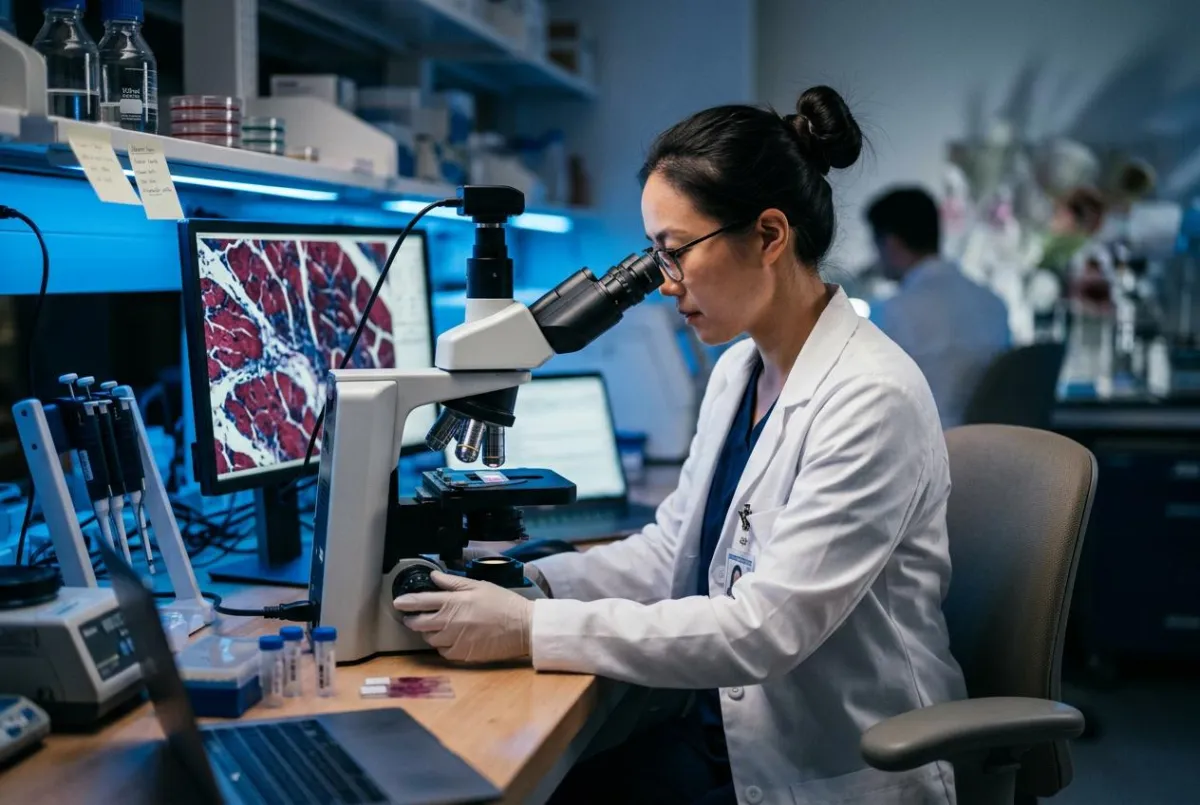
Emerging Gut Health Research 2026: What the Latest Science Is Revealing
As interest in gut health continues to accelerate in June 2026, researchers around the world are publishing findings that are reshaping our fundamental understanding of the human microbiome. What was once a niche area of gastroenterology has evolved into one of the most active and consequential fields in biomedical science. From the gut-brain axis to synbiotic interventions, the pace of discovery this year has been remarkable — and the implications stretch far beyond digestion alone.
This post takes a close look at some of the most significant areas of emerging research, highlighting specific mechanisms and clinical findings that are moving the field forward in meaningful ways.
MULTI-SPECIES SYNBIOTICS AND MICROBIOME DIVERSITY
One of the most talked-about areas of gut research in 2026 involves synbiotics — combinations of probiotics and prebiotics designed to work synergistically. A recent randomized controlled trial found that multi-species synbiotic supplementation significantly enhanced gut microbial diversity and reduced systemic inflammation in study participants. This is noteworthy because microbial diversity is increasingly recognized as a key marker of gut resilience and long-term health. The study adds to a growing body of evidence suggesting that combining targeted probiotic strains with appropriate prebiotic fiber is more effective than using either intervention alone.
What makes synbiotic research particularly exciting is its practical applicability. Rather than taking a broad-spectrum probiotic and hoping for the best, researchers are now identifying specific strain-fiber pairings that support distinct microbial communities. This precision approach is one of the defining trends of gut science in 2026, and it is beginning to influence both clinical practice and consumer supplement design.
PREBIOTIC FIBER COMPLEXITY AND METABOLIC OUTCOMES
Another major thread in current research involves how the structural diversity of prebiotic fibers influences microbial composition and metabolic activity. Not all fibers are created equal, and scientists are now mapping exactly how different fiber types selectively feed different microbial populations. A study examining this in depth found that prebiotic structural diversity directly shapes gut microbial diversity, composition, and metabolic activity — offering compelling evidence that dietary fiber variety may matter just as much as total fiber intake.
This has real-world implications for anyone optimizing their diet for gut health. Rather than simply increasing fiber quantity, the emerging guidance points toward consuming a wide range of fiber types — from inulin and fructooligosaccharides to resistant starch and pectin — to nourish a broader spectrum of beneficial bacteria. For readers who follow our coverage of gut health and microbiome research, this represents one of the more actionable findings to emerge from the lab so far this year.
THE GUT-BRAIN AXIS GETS MORE GRANULAR
The gut-brain axis remains one of the most intensively studied areas in all of gut science, and 2026 is delivering fresh mechanistic insights. Researchers are moving beyond simply establishing that the gut and brain communicate — they are now identifying the specific molecular pathways involved. A comprehensive review published recently explored how the microbiome-gut-brain axis impacts brain development and mental health, with particular attention to how disruptions in microbial balance during early life may have long-lasting neurological consequences.
What is emerging from this research is a picture of the gut as an active participant in neurological function, not merely a passive bystander. Microbial metabolites, including short-chain fatty acids and neurotransmitter precursors, appear to influence everything from mood regulation to cognitive performance. This has opened new avenues of investigation in neuropsychiatry, and several clinical trials are currently underway testing whether microbiome-targeted interventions can support mental health outcomes alongside conventional treatments.
PROBIOTICS, STRESS, AND SYSTEMIC INFLAMMATION
A striking finding from a 2026 randomized controlled trial adds nuance to our understanding of how probiotics interact with the stress response. The trial found that probiotics mitigated stress and inflammation in malnourished adults through gut microbiota modulation, suggesting that probiotic supplementation may help buffer the physiological impact of psychological and nutritional stress. While this research focused on a vulnerable population, the mechanisms identified — including reductions in pro-inflammatory cytokines and improvements in gut barrier integrity — are broadly relevant.
This connects to a wider pattern in emerging research: the gut is increasingly understood as a central regulator of systemic inflammation. Whether the stressor is psychological, physical, or dietary, the microbial community appears to play a modulating role. For athletes and active individuals interested in recovery, this is especially relevant — and it ties directly into what we cover in our athletic recovery and inflammation research section.
WHAT THESE FINDINGS MEAN FOR EVERYDAY HEALTH
Taken together, the emerging research of 2026 points toward a more integrated, precision-oriented model of gut health. The old approach of simply adding a probiotic supplement to an otherwise unchanged diet is giving way to more nuanced strategies: combining diverse fiber sources, selecting specific probiotic strains matched to individual health goals, and recognizing that the gut is deeply intertwined with brain health, immune regulation, and stress physiology.
For health-conscious readers, the takeaway is not to wait for perfect clinical consensus before taking action. The existing evidence already strongly supports eating a wide variety of plant foods, minimizing ultra-processed food intake, managing chronic stress, and considering targeted supplementation where appropriate. The newer research is refining and reinforcing these fundamentals, not replacing them. Staying current with recovery science and microbiome research is one of the best ways to keep your approach aligned with what the evidence actually supports.
KEY TAKEAWAY: The most significant gut health research emerging in 2026 points toward precision-based strategies — combining structurally diverse prebiotic fibers with targeted probiotic strains and recognizing the gut's central role in brain health, inflammation, and stress regulation — as the future of microbiome-focused wellness.
If you found this research breakdown useful, explore RecoveryScienceDaily.com for more evidence-based guides covering gut health, microbiome science, and recovery research. We translate the latest peer-reviewed findings into practical, accessible insights you can actually use.
FAQ
Q: What is the most important gut health finding from 2026 so far?
A: One of the standout findings involves synbiotic supplementation — combining probiotics with prebiotic fiber — which has been shown in a recent RCT to significantly enhance gut microbial diversity and reduce inflammation. This precision approach to microbiome support is emerging as a major trend in clinical and consumer gut health research.
Q: How does prebiotic fiber variety affect gut health?
A: Research published in 2026 shows that the structural diversity of prebiotic fibers — not just total fiber intake — shapes microbial diversity and metabolic activity in the gut. Consuming a wide range of fiber types from different plant foods appears to nourish a broader spectrum of beneficial bacteria than relying on a single fiber source.
Q: Is there new evidence linking gut health to brain and mental health?
A: Yes, recent reviews have deepened our understanding of the microbiome-gut-brain axis, showing that microbial metabolites influence neurotransmitter pathways, mood regulation, and even brain development. Researchers are now exploring whether microbiome-targeted interventions could serve as complementary tools in supporting mental health outcomes.
Back to BlogThis post takes a close look at some of the most significant areas of emerging research, highlighting specific mechanisms and clinical findings that are moving the field forward in meaningful ways.
MULTI-SPECIES SYNBIOTICS AND MICROBIOME DIVERSITY
One of the most talked-about areas of gut research in 2026 involves synbiotics — combinations of probiotics and prebiotics designed to work synergistically. A recent randomized controlled trial found that multi-species synbiotic supplementation significantly enhanced gut microbial diversity and reduced systemic inflammation in study participants. This is noteworthy because microbial diversity is increasingly recognized as a key marker of gut resilience and long-term health. The study adds to a growing body of evidence suggesting that combining targeted probiotic strains with appropriate prebiotic fiber is more effective than using either intervention alone.
What makes synbiotic research particularly exciting is its practical applicability. Rather than taking a broad-spectrum probiotic and hoping for the best, researchers are now identifying specific strain-fiber pairings that support distinct microbial communities. This precision approach is one of the defining trends of gut science in 2026, and it is beginning to influence both clinical practice and consumer supplement design.
PREBIOTIC FIBER COMPLEXITY AND METABOLIC OUTCOMES
Another major thread in current research involves how the structural diversity of prebiotic fibers influences microbial composition and metabolic activity. Not all fibers are created equal, and scientists are now mapping exactly how different fiber types selectively feed different microbial populations. A study examining this in depth found that prebiotic structural diversity directly shapes gut microbial diversity, composition, and metabolic activity — offering compelling evidence that dietary fiber variety may matter just as much as total fiber intake.
This has real-world implications for anyone optimizing their diet for gut health. Rather than simply increasing fiber quantity, the emerging guidance points toward consuming a wide range of fiber types — from inulin and fructooligosaccharides to resistant starch and pectin — to nourish a broader spectrum of beneficial bacteria. For readers who follow our coverage of gut health and microbiome research, this represents one of the more actionable findings to emerge from the lab so far this year.
THE GUT-BRAIN AXIS GETS MORE GRANULAR
The gut-brain axis remains one of the most intensively studied areas in all of gut science, and 2026 is delivering fresh mechanistic insights. Researchers are moving beyond simply establishing that the gut and brain communicate — they are now identifying the specific molecular pathways involved. A comprehensive review published recently explored how the microbiome-gut-brain axis impacts brain development and mental health, with particular attention to how disruptions in microbial balance during early life may have long-lasting neurological consequences.
What is emerging from this research is a picture of the gut as an active participant in neurological function, not merely a passive bystander. Microbial metabolites, including short-chain fatty acids and neurotransmitter precursors, appear to influence everything from mood regulation to cognitive performance. This has opened new avenues of investigation in neuropsychiatry, and several clinical trials are currently underway testing whether microbiome-targeted interventions can support mental health outcomes alongside conventional treatments.
PROBIOTICS, STRESS, AND SYSTEMIC INFLAMMATION
A striking finding from a 2026 randomized controlled trial adds nuance to our understanding of how probiotics interact with the stress response. The trial found that probiotics mitigated stress and inflammation in malnourished adults through gut microbiota modulation, suggesting that probiotic supplementation may help buffer the physiological impact of psychological and nutritional stress. While this research focused on a vulnerable population, the mechanisms identified — including reductions in pro-inflammatory cytokines and improvements in gut barrier integrity — are broadly relevant.
This connects to a wider pattern in emerging research: the gut is increasingly understood as a central regulator of systemic inflammation. Whether the stressor is psychological, physical, or dietary, the microbial community appears to play a modulating role. For athletes and active individuals interested in recovery, this is especially relevant — and it ties directly into what we cover in our athletic recovery and inflammation research section.
WHAT THESE FINDINGS MEAN FOR EVERYDAY HEALTH
Taken together, the emerging research of 2026 points toward a more integrated, precision-oriented model of gut health. The old approach of simply adding a probiotic supplement to an otherwise unchanged diet is giving way to more nuanced strategies: combining diverse fiber sources, selecting specific probiotic strains matched to individual health goals, and recognizing that the gut is deeply intertwined with brain health, immune regulation, and stress physiology.
For health-conscious readers, the takeaway is not to wait for perfect clinical consensus before taking action. The existing evidence already strongly supports eating a wide variety of plant foods, minimizing ultra-processed food intake, managing chronic stress, and considering targeted supplementation where appropriate. The newer research is refining and reinforcing these fundamentals, not replacing them. Staying current with recovery science and microbiome research is one of the best ways to keep your approach aligned with what the evidence actually supports.
KEY TAKEAWAY: The most significant gut health research emerging in 2026 points toward precision-based strategies — combining structurally diverse prebiotic fibers with targeted probiotic strains and recognizing the gut's central role in brain health, inflammation, and stress regulation — as the future of microbiome-focused wellness.
If you found this research breakdown useful, explore RecoveryScienceDaily.com for more evidence-based guides covering gut health, microbiome science, and recovery research. We translate the latest peer-reviewed findings into practical, accessible insights you can actually use.
FAQ
Q: What is the most important gut health finding from 2026 so far?
A: One of the standout findings involves synbiotic supplementation — combining probiotics with prebiotic fiber — which has been shown in a recent RCT to significantly enhance gut microbial diversity and reduce inflammation. This precision approach to microbiome support is emerging as a major trend in clinical and consumer gut health research.
Q: How does prebiotic fiber variety affect gut health?
A: Research published in 2026 shows that the structural diversity of prebiotic fibers — not just total fiber intake — shapes microbial diversity and metabolic activity in the gut. Consuming a wide range of fiber types from different plant foods appears to nourish a broader spectrum of beneficial bacteria than relying on a single fiber source.
Q: Is there new evidence linking gut health to brain and mental health?
A: Yes, recent reviews have deepened our understanding of the microbiome-gut-brain axis, showing that microbial metabolites influence neurotransmitter pathways, mood regulation, and even brain development. Researchers are now exploring whether microbiome-targeted interventions could serve as complementary tools in supporting mental health outcomes.